Six Body Measurements That Beat a Size Label
Six tape measurements decide fit better than any size chart. Where each number starts and ends, and the errors that move it by a full size.
Reviewed by Tessa Marlow · Updated Oct 13, 2026
The numbers first
- A US 8 is a range, not a point, and most brands grade the waist in 5 cm steps, so two people in the same label can sit a full size apart.
- The crease is the natural waist, usually 2 or 3 cm above the navel.
- A held breath can trim 2 cm, and that is the difference between a comfortable trouser and one that strains at the button.
- The fullest point of the hip is usually 18 to 23 cm below the natural waist.
Sizes are averages. A US 8 is a range, not a point, and most brands grade the waist in 5 cm steps, so two people in the same label can sit a full size apart. Six numbers settle it faster than any chart.
Bust and chest: keep the tape level
Measure the fullest point with the tape under the arms and parallel to the floor. Arms down, relaxed. A tape that dips at the back reads long, and the extra length lands in the bust figure rather than the back. Wear the bra you will wear under the garment, or none if that is normal for you.
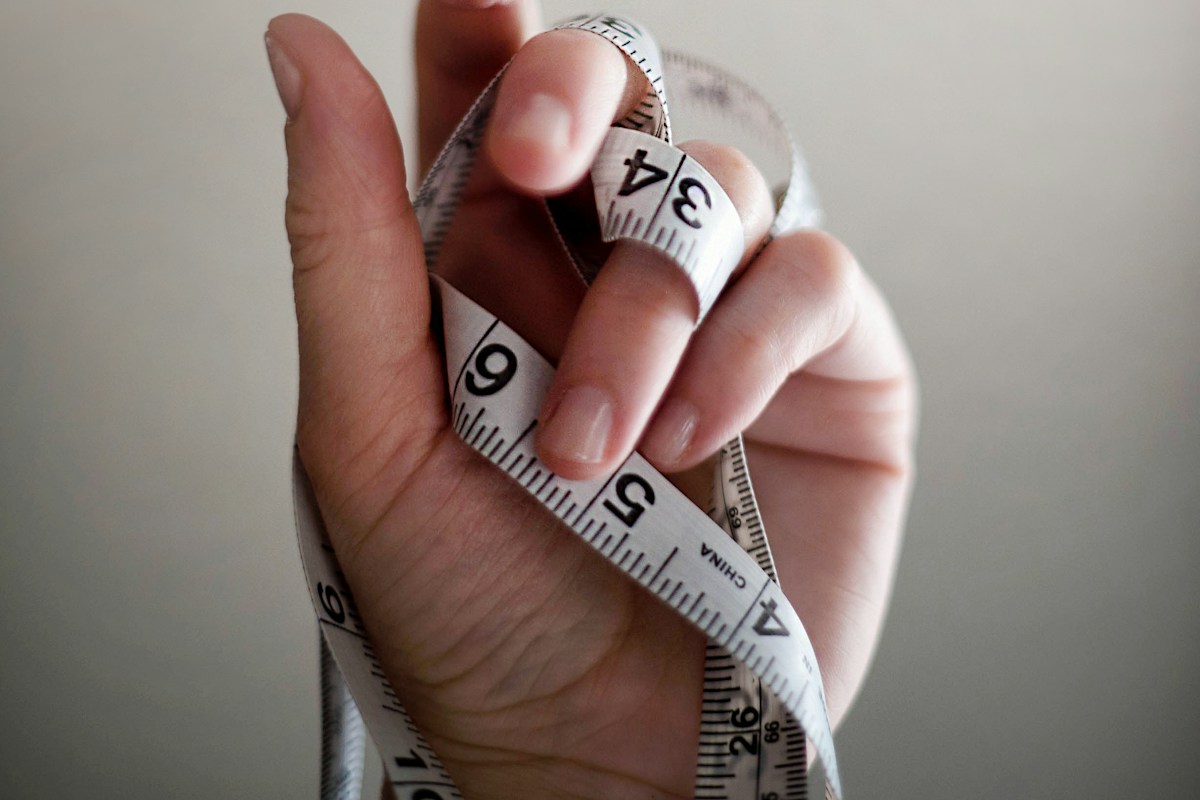
Waist: bend, do not guess
Stand relaxed and bend sideways. The crease is the natural waist, usually 2 or 3 cm above the navel. Measure at the end of a normal exhale. A held breath can trim 2 cm, and that is the difference between a comfortable trouser and one that strains at the button.
The tape should sit flat enough to slide one finger underneath. Pull it tight and you measure the compressed body, not the body a garment has to cover.
Hip sits lower than the hip bone
The fullest point of the hip is usually 18 to 23 cm below the natural waist. That is well below the iliac bone most people measure by feel. Stand with feet together and let the tape find the widest line, front and back at the same height.
For trousers, add the rise: the distance from the crotch seam to the top of the waistband. Two pairs with the same waist and hip can sit at different heights, which changes where the waistband presses. Rise and inseam covers how those two numbers interact.
Three lengths a chart will not print
Inseam runs from the crotch seam to the floor, no shoes. Sleeve runs from the shoulder seam to the wrist bone with the arm slightly bent, because a straight arm shortens the measurement. Back length runs from the high point of the shoulder to the natural waist.
Shoulder width is seam to seam across the back. It is the number most charts omit and the one a tailor can least fix: moving a shoulder seam more than about 1.5 cm means removing the sleeve head, and that rebuild costs more than the jacket is worth.
Put the six numbers beside the chart
| Measurement | Tape position | Common error | Allow |
|---|---|---|---|
| Bust | Fullest point, level | Tape dips at the back | 2 cm |
| Waist | Natural crease | Measured over a waistband | 2 cm |
| Hip | Widest point, 20 cm down | Tape sits on the hip bone | 2 cm |
| Inseam | Crotch seam to floor | Shoes left on | 1 cm |
| Sleeve | Shoulder seam to wrist bone | Arm held straight | 1 cm |
| Shoulder | Seam to seam, across back | Tape follows the shoulder curve | 0.5 cm |
Compare your figures with the right document. A body chart describes the person, a garment chart describes the finished item, and the gap between them is ease. Spec sheets explain how to tell the two apart. If you are shopping across regions, size conversions start from the same six numbers.
Write them down once, in centimetres and inches. A 76 cm waist is 29.9 in, and the half inch matters when a brand cuts to the inch.
More in Buying Guides
FAQ
- Should I measure over clothes or on bare skin?
- On bare skin or in the underwear you wear under the garment. A waistband adds 1 to 2 cm, which is enough to move a trouser size. Measure in the evening, when the body is at its widest.
- Where exactly is the natural waist?
- Bend sideways and find the crease. It usually sits 2 to 3 cm above the navel. Measure at the end of a normal exhale with the tape flat, not pulled tight.
- Why do my measurements not match the size chart?
- Most charts describe the body a size was cut for, not the finished garment. Compare your numbers with the body chart, then add the ease stated for the fit, usually 4 to 10 cm at the bust.
Second Look
Every figure used above, with the section it appears in. If a number here does not match the page you are reading, trust the page — and tell us.
- US 8
- Introduction
- 5 cm
- Introduction
- 3 cm
- Waist: bend, do not guess
- 2 cm
- Waist: bend, do not guess
- 23 cm
- Hip sits lower than the hip bone
- 1.5 cm
- Three lengths a chart will not print
- 20 cm
- Put the six numbers beside the chart
- 1 cm
- Put the six numbers beside the chart
Tessa Marlow
Writes about garment construction, leather goods and footwear specs. Started in retail floor management before moving to editorial research. Our standards.