Size Conversions for Shoes and Bags, US / UK / EU / cm
US, UK, EU and JP shoe sizes sit on different scales, and lasts make any conversion approximate. Foot length in centimetres, plus bag measurement, explained.
Reviewed by Tessa Marlow · Updated Sep 6, 2026
The numbers first
- That is why one foot length can need a US 8 in one brand and an 8.5 in another, and why the centimetre travels better than any national scale.
- A Paris point is about 6.7 mm, a barleycorn about 8.5 mm, so the same span of foot needs roughly four EU steps for every three UK steps.
- It fixes length, ball girth, instep height, heel volume and toe spring. "EU 42" describes length only, so two factories can build a 42 on different lasts and produce shoes that fit nothing alike.
- Two feet that both measure 26.0 cm can need different width letters in the same brand, which is why the width systems brands publish are worth reading on their own.
The number on the box describes a mould, not your foot. That is why one foot length can need a US 8 in one brand and an 8.5 in another, and why the centimetre travels better than any national scale. Every conversion table on this page is a translation between labelling systems, and every translation loses something at the edges.
Foot length is the number that travels
ISO 9407 defines foot length as the horizontal distance from the centre of the back of the heel to the end of the most prominent toe, measured standing barefoot with weight distributed evenly. The standard calls the resulting figure Mondopoint, and Mondopoint is the only scale on this page that names the thing itself: millimetres of foot, not millimetres of last, not a count of some historical unit. Practically: measure in the evening, when feet are longest, and take the larger of your two feet.
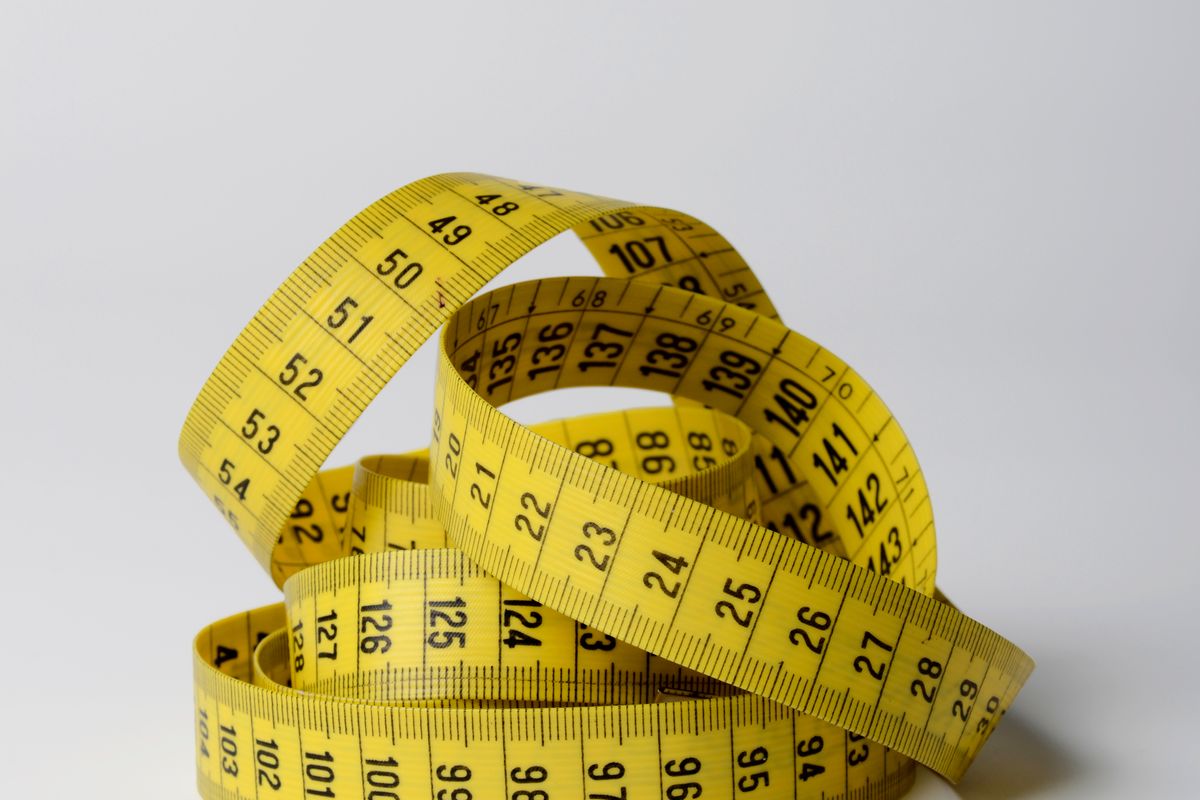
Most people have one foot longer than the other, usually by a few millimetres. A shoe fitted to the smaller foot will pinch the larger one, and no conversion table fixes that, because the table never sees your second foot. The number that travels is the larger measurement.
Measuring so the number survives the order
The measurement method decides whether the centimetre you send to a warehouse matches the centimetre the standard means. Put a sheet of paper against a wall, stand on it with your heel touching the wall, and mark the paper at the tip of the longest toe. The longest toe is not always the big one, which is exactly why the mark matters more than an eyeball estimate. Keep the pen upright; a pen held at an angle adds several millimetres of shadow to the mark.
Measure both feet, standing, at the end of a normal day. Then measure again in the socks you plan to wear with the shoe, because the length you order is the length of foot plus sock. Write down the millimetre figure and carry it between brands. The centimetre is the only number that does not need translating.
Why one foot measures three different numbers
Socks are the first variable. The standard defines foot length barefoot or in thin hose, so a thick sock adds length that gets baked into your Mondopoint figure, and into the size you order from it. Load is the second: a foot bearing weight spreads and lengthens, so a reading taken sitting or leaning back comes up short. Time of day and the gap between your two feet make up the rest. Measure barefoot, then allow for the sock you will actually wear.
There is also a measurement-skill variable. Two careful people measuring the same foot can land a few millimetres apart, and a few millimetres is close to a third of a size in most systems. This is the honest error bar on every conversion table ever printed. If a fit decision comes down to less than that, the measurement cannot settle it; a brand’s width chart or a try-on has to.
The conversion table
| Foot length | Mondopoint | EU | UK | US men | US women | JP |
|---|---|---|---|---|---|---|
| 25.0 cm | 250 | 39 | 6 | 7 | 8 | 25.0 |
| 26.0 cm | 260 | 41 | 7 | 8 | 9 | 26.0 |
| 27.0 cm | 270 | 42 | 8 | 9 | 10 | 27.0 |
| 28.0 cm | 280 | 44 | 9 | 10 | 11 | 28.0 |
Read down the foot-length column, not across the rest. The scales do not share a step size: the EU counts Paris points of two-thirds of a centimetre, the UK counts barleycorns of one-third of an inch, and Japan prints foot length itself, though its shoes are built about a centimetre longer inside. Charts disagree by half a size in places; ISO/TS 19407 is a conversion specification, not a formula.
The step-size mismatch is why the EU column jumps irregularly. A Paris point is about 6.7 mm, a barleycorn about 8.5 mm, so the same span of foot needs roughly four EU steps for every three UK steps. The US column tracks the UK at the same barleycorn step, one size apart for men and more for women, which is why a transatlantic order that ignores the men’s and women’s split fails so reliably. None of these scales carries width. They were built to count length, and they count it on different rulers.
Why one foot length buys different shoes
The last is the form the shoe is built around. It fixes length, ball girth, instep height, heel volume and toe spring. “EU 42” describes length only, so two factories can build a 42 on different lasts and produce shoes that fit nothing alike. A last wrong at the ball of the foot does not improve with breaking in.
Lasts also get graded between sizes, and grading is where the second axis hides. When a factory scales a last from a 42 to a 43, it widens the forefoot by some amount the size label never mentions. One brand grades generously and its larger sizes run roomy; another grades narrowly and its larger sizes run long and flat. This is why “order a half size up for wide feet” works at one brand and fails at the next. The scale tells you what got longer. Only the brand’s grading tells you what got wider, and most brands do not publish it.
Kids’ sizes and the crossover point
US children’s sizes run 1 to 13 and then restart at 1 for youth; there is no children’s 14. Where that joins women’s sizing depends on brand and width grading, and typically lands in the youth 4–7 range by foot length, not at a fixed number.
The restart traps a specific kind of order: a parent buying a youth size for a growing teenager, or a small-footed adult buying from the kids’ column to save money. Both work only if the foot length matches, because the youth last is not a shrunken women’s last. It has its own proportions at the heel and instep. Check the centimetre column, not the number.
Width is the axis the table hides
Every row above is a length claim. The same foot length exists in narrow heels, high insteps, wide forefeet and everything between, and the table is silent about all of it. Two feet that both measure 26.0 cm can need different width letters in the same brand, which is why the width systems brands publish are worth reading on their own. Our wide-fit shoes guide covers what the letters mean and which brands grade honestly.
Bags: exterior, interior and the opening
Bag dimensions published on spec sheets are normally exterior. Leather thickness, lining and seams eat into the interior, and a framed zip opening can be several centimetres narrower than the body. Fill a soft bag to shape before measuring, or the depth reads low.
One inch is exactly 25.4 mm, so a 30 cm bag is 11.8 in. To match a bag you own, record the width at the widest point, the height excluding handles, the depth at the base gusset, and the clear opening — then measure your largest item against the opening.
Bags get one concession that shoes never offer: the item you carry has published dimensions too. A 16-inch laptop is 16 inches on the diagonal, which does not tell you whether it enters a bag whose opening is measured across. Convert your gear to the same centimetres as the bag, compare opening to object, and the exterior-versus-interior ambiguity mostly stops mattering. What cannot be converted is the opening: a stiff framed zip keeps its true width whether you want it to or not.
More in Buying Guides
FAQ
- Why do the same foot measurements give different sizes in different brands?
- A size labels the last, not the foot. Each brand shapes its own last, so length, ball girth, instep height and heel volume vary between shoes marked the same size.
- Should I measure my feet in the morning or at the end of the day?
- At the end of the day, standing, with weight on the foot. Feet spread under load, so a morning measurement can be a half size short.
- Are bag dimensions exterior or interior?
- Usually exterior. Leather thickness, lining and seams consume interior space, so treat the published depth as an upper bound and check the opening.
Second Look
Every figure used above, with the section it appears in. If a number here does not match the page you are reading, trust the page — and tell us.
- US 8
- Introduction
- 8.5 in
- Introduction
- JP 25
- The conversion table
- 0 cm
- The conversion table
- 26.0 cm
- The conversion table
- 27.0 cm
- The conversion table
- 28.0 cm
- The conversion table
- 6.7 mm
- The conversion table
Tessa Marlow
Writes about garment construction, leather goods and footwear specs. Started in retail floor management before moving to editorial research. Our standards.