Carry-On Limits, Airline by Airline, in Centimetres
Carry-on and personal-item limits for major airlines, in centimetres with inches in brackets, and how to measure a bag the way the gate does.
Reviewed by Tessa Marlow · Updated Sep 19, 2026
The numbers first
- The 22 x 14 x 9 in box US carriers converged on is a domestic convention; European low-cost carriers do not use it.
- The 22 x 14 x 9 in box the five US carriers share is a convergence on what fits the overhead bins of a common narrowbody fleet, published in inches and converted to centimetres.
- The European rows are not stricter by accident — their fare structures push the size limit behind a paywall.
- A bag built exactly to the US box measures 56 cm long, one centimetre over Lufthansa's 55 cm frame, and it fails there no matter how it is packed.
No international carry-on standard exists. The 22 x 14 x 9 in box US carriers converged on is a domestic convention; European low-cost carriers do not use it. Figures came from each airline’s own baggage page on 19 September 2026.
| Airline | Carry-on | Personal item |
|---|---|---|
| American Airlines | 56 x 36 x 23 cm (22 x 14 x 9 in) | 45 x 35 x 20 cm (18 x 14 x 8 in) |
| Delta Air Lines | 56 x 35 x 23 cm (22 x 14 x 9 in) | not published |
| United Airlines | 56 x 35 x 23 cm (22 x 14 x 9 in) | 43 x 25 x 22 cm (17 x 10 x 9 in) |
| Alaska Airlines | 56 x 36 x 23 cm (22 x 14 x 9 in) | not published |
| JetBlue | 56 x 36 x 23 cm (22 x 14 x 9 in) | 43 x 33 x 20 cm (17 x 13 x 8 in) |
| Lufthansa | 55 x 40 x 23 cm (21.7 x 15.7 x 9.1 in) | 40 x 30 x 15 cm (15.7 x 11.8 x 5.9 in) |
| easyJet | 56 x 45 x 25 cm (22 x 17.7 x 9.8 in), paid | 45 x 36 x 20 cm (17.7 x 14.2 x 7.9 in), free |
| Ryanair | 55 x 40 x 20 cm (21.7 x 15.7 x 7.9 in), paid | 40 x 30 x 20 cm (15.7 x 11.8 x 7.9 in), free |
Why the boxes differ
The table looks like disagreement, but each column answers a different question. The 22 x 14 x 9 in box the five US carriers share is a convergence on what fits the overhead bins of a common narrowbody fleet, published in inches and converted to centimetres. The European rows are not stricter by accident — their fare structures push the size limit behind a paywall. Ryanair and easyJet sell the larger box as an add-on and give the smaller one away, so the number they lead with is the free one, and the free one is small.
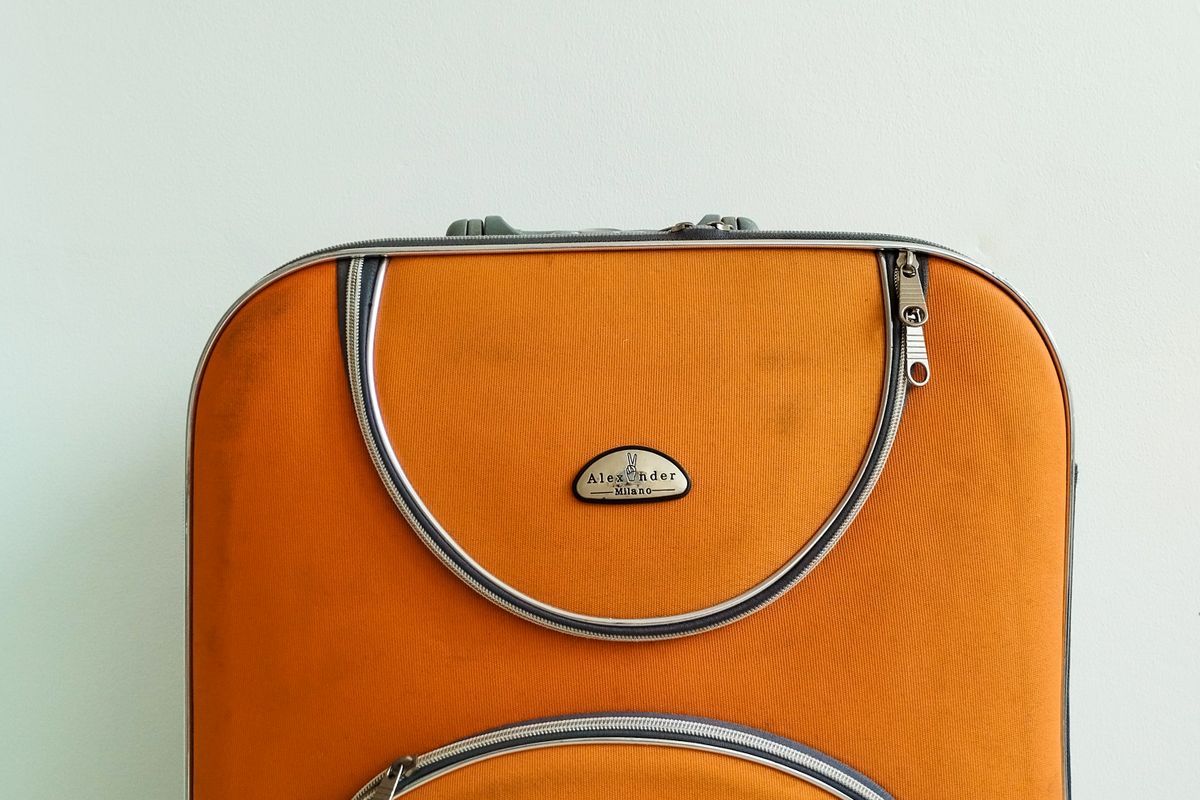
Arithmetic does the rest. A bag built exactly to the US box measures 56 cm long, one centimetre over Lufthansa’s 55 cm frame, and it fails there no matter how it is packed. Lufthansa’s allowance is deeper front to back but shorter overall, which means a bag optimised for one row of this table is optimised for that row only. The convergence among the US carriers is real, and it ends at the Atlantic.
The personal-item column converges harder than the carry-on column does, and almost nobody notices. American’s 45 x 35 x 20 cm and easyJet’s free 45 x 36 x 20 cm agree on the length to the centimetre, and the other published figures cluster just under it. That is not coordination; it is the width of the seat frame doing the designing. A bag bought to fit an American Airlines seat frame will therefore behave itself under most other seats in the table, which makes the personal item the one allowance worth buying against from the start.
Three bags, three different rules
Your personal item goes under the seat in front of you, your carry-on in the overhead bin, and a checked bag in the hold at 158 cm (62 in) total. They are separate allowances, and the personal item is the one most travellers breach, because it reads like an exemption rather than a measurement. United’s limit is smaller than American’s, so one backpack can be both.
The personal item decides the trip
The personal item column looks like the minor one, and it is the one that decides whether the trip runs smoothly. It is the allowance that is free on every row of the table, and on the European low-cost rows it is the only free one. It also has the least published geometry: Delta and Alaska publish no personal-item figure, which does not mean anything goes, it means the underseat space is the check.
That space is not uniform. It varies with the aircraft type, with the seat frame, and with what is in front of the row — an exit row or bulkhead gives you nothing to slide a bag under at all. A bag at the published personal-item limit of one carrier can still fight the frame on the regional aircraft the itinerary actually uses. Soft-sided bags buy margin here because they compress to the space available, which is why a tote sized for a 16-inch laptop often clears a frame its rigid dimensions would miss on paper.
Pack the personal item as if the carry-on will be gate-checked at the jet bridge. Medication, documents and a charger live under the seat, not in the bin, because the bin is the part of the aircraft you lose access to first.
That habit also changes what the carry-on needs to be. A bag that only carries clothes can be soft, compressible and cheap to replace, because a gate-checked spare shirt is an inconvenience; a bag carrying anything fragile or irreplaceable has to be packed for the hold whether it was designed for it or not. Deciding which bag holds what before leaving for the airport is what makes a gate check survivable, and it costs nothing at booking time.
Where the fare class changes the answer
Size is only half of it. United’s Basic Economy removes the carry-on except on transatlantic, transpacific and South America routes, and Lufthansa’s Economy Basic on short- and medium-haul allows one personal item of 40 x 30 x 15 cm. A bag that clears American Airlines is a paid upgrade on Ryanair, whose only free bag is 40 x 30 x 20 cm. Ryanair’s own news release quotes 40 x 20 x 25 cm for that bag; go by the policy page.
Weight, where anybody publishes it
Lufthansa states 8 kg, easyJet 15 kg and Ryanair 10 kg on its paid bag. Only these three publish a carry-on weight limit; American, Delta, Alaska, United and JetBlue publish none, and where no number exists the test is whether you can lift the bag into the bin. hard-shell luggage hides weight less well than a soft bag.
Soft shells buy margin, hard shells spend it
A hard-shell case is measured at its shell. It has no give at the sizer, its handles and wheels sit at the extremes of its dimensions, and a bulging front pocket counts toward the frame the same way the shell does. What it buys back is protection for the contents and a silhouette that passes the sizer identically on the return flight, because the factory fixed the number.
A soft bag trades that protection for tolerance. It can be packed to just under the frame, an overstuffed one can be repacked at the gate, and its expansion zip is a promise the sizer does not honour — measured packed, an unzipped expansion panel is part of the height. The trade shows up in the measurement rules themselves: a soft bag’s longest-point figure is partly under the owner’s control, and a hard shell’s was fixed at the factory. Neither changes the published limit; they change how much of the limit is actually available to pack.
Measure the way the gate measures
Measure packed, not empty, at the longest point of each dimension, and include wheels, handles, straps and any pocket that bulges when full. Delta caps length plus width plus height at 114 cm (45 in). The sizer decides, not your tape measure.
Confirm the figure the week you fly
The airline’s own baggage page is the only source worth trusting, and the one that changes. Check the operating carrier for every segment, and pack to the strictest limit on a mixed itinerary — the same logic that decides an underseat bag.
More in Bags & Luggage
FAQ
- Is there a standard carry-on size across airlines?
- No. Several US carriers have converged on 22 x 14 x 9 inches (56 x 36 x 23 cm), but European low-cost carriers use different numbers, and a bag that passes one airline can be a paid upgrade on another.
- Why do airlines publish a personal-item size but no carry-on weight?
- Because size is what the airport sizer checks and weight is what staff assess by hand. Carriers that publish no number usually describe the practical test instead: you must be able to lift the bag into the bin yourself.
- Do I measure my bag empty or packed?
- Packed. Measure the longest point of each dimension and include wheels, handles, straps and any pocket that bulges once it is full, because that is how the sizer sees it.
Second Look
Every figure used above, with the section it appears in. If a number here does not match the page you are reading, trust the page — and tell us.
- 14 x 9 in
- Introduction
- Eur
- Introduction
- 36 x 23 cm
- Introduction
- 35 x 20 cm
- Introduction
- 14 x 8 in
- Introduction
- 35 x 23 cm
- Introduction
- 25 x 22 cm
- Introduction
- 10 x 9 in
- Introduction
Tessa Marlow
Writes about garment construction, leather goods and footwear specs. Started in retail floor management before moving to editorial research. Our standards.