Denim Weight in Ounces: What the Number Sets and What It Leaves Open
Denim weight is ounces per square yard. What the 8, 12 and 16 oz bands mean, why the sanforized label matters more than the number, and where jeans sit.
Reviewed by Tessa Marlow · Updated Nov 7, 2026
The numbers first
- The 12 to 14 oz range is where most mass-market jeans sit: heavy enough to survive daily wear and hold a shape, light enough to break in without months of protest.
- Jeans above 18 oz are a hobby purchase as much as a garment — wearers commonly report several weeks of daily wear before the stiffness gives.
- Weight does not decide this — a 14 oz sanforized pair and a 14 oz unsanforized pair share a number and almost nothing else.
- Weave: below roughly 10.5 oz, denim is usually woven 2×1 rather than the classic 3×1, which reads lighter and softer at the same weight.
Denim weight is measured in ounces per square yard, and the number predicts two things: how long the break-in takes and how the fabric holds a shape. It does not predict durability by itself, and it says nothing at all about size — that job belongs to the sanforized label, which decides whether a raw pair shrinks less than 1 percent or up to 10 percent on the first wash. Reading the two numbers together is the whole skill.
What the ounces actually measure
The ounce figure is fabric weight per square yard, not per garment and not per thread count. One ounce per square yard converts to roughly 34 grams per square metre, so a 14 oz denim is about 475 gsm — the same arithmetic the T-shirt weight guide applies to jersey, just on a much heavier cloth.
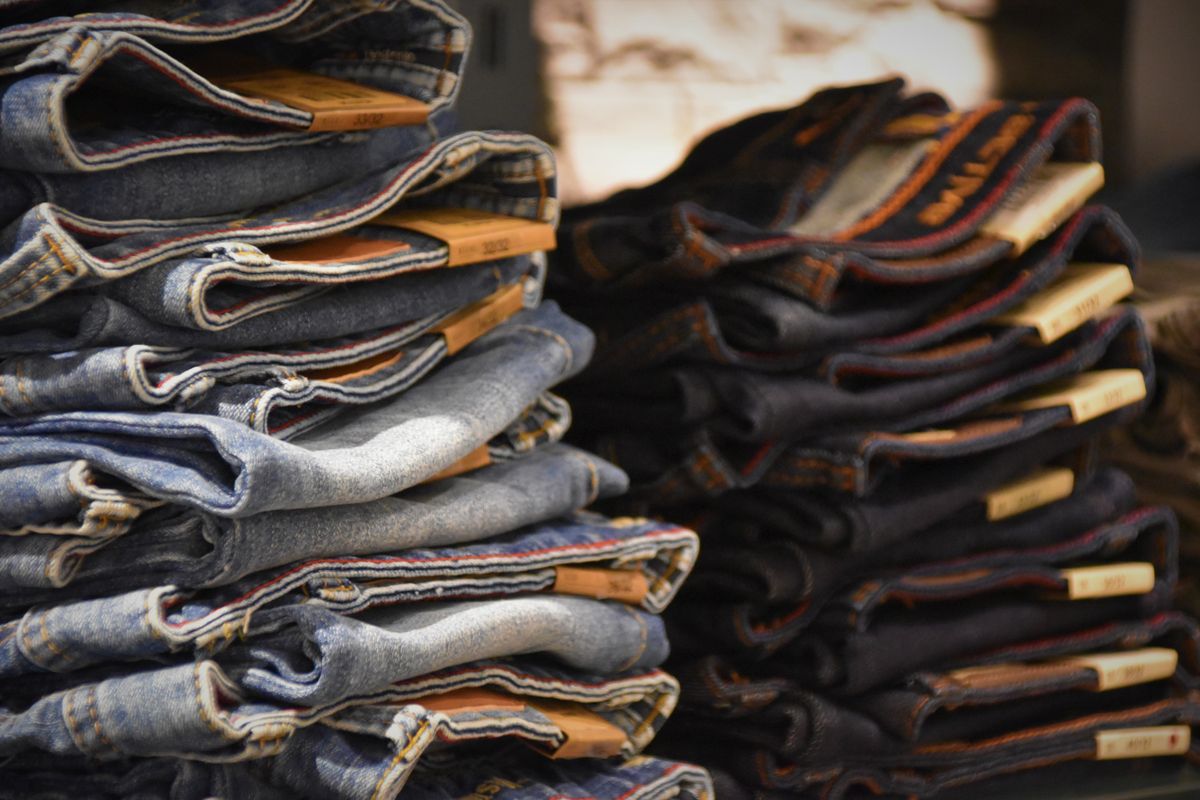
Mill weight is measured on finished fabric, after dyeing, washing and sanforizing. Cloth straight off the loom runs 5 to 15 percent heavier because it still carries starch and sizing, which is why a mill quote and a bargain-market quote for “the same” denim can legitimately differ. The standard measurement procedure conditions the specimen in a controlled atmosphere before weighing, so the figure on a spec sheet is more repeatable than most garment numbers — the discipline described in how to read a spec sheet.
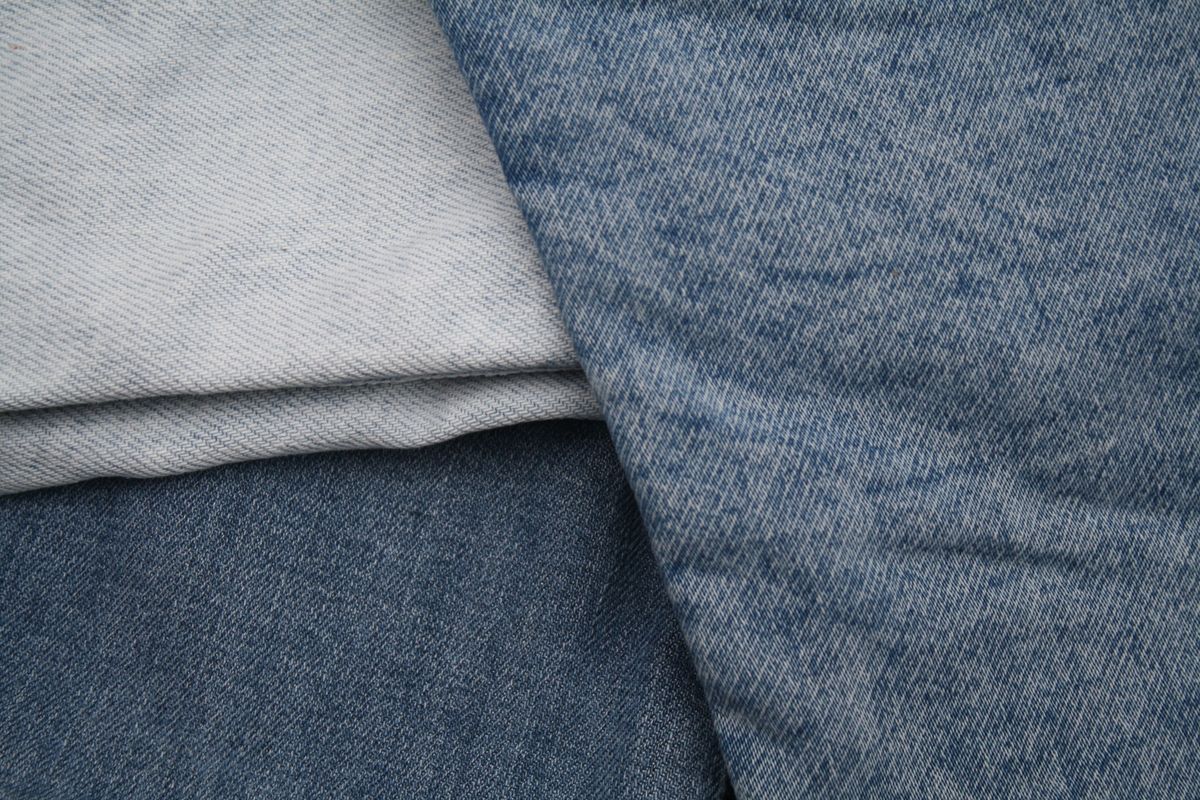
The 3×1 twill line runs diagonally across each layer — weave structure you can verify by eye before the ounce number confirms the weight.
The three weight bands
Industry tables break the scale at 12 and 16 oz, and the garment mapping is consistent across mills even where the band edges differ slightly:
| Weight band | Approx. gsm | Typical garments | What to expect |
|---|---|---|---|
| Under 12 oz | up to ~405 | Shirts, skirts, summer jeans | Soft from day one, drapes, breathes |
| 12–16 oz | ~405–543 | Classic five-pocket jeans, light jackets | The everyday band; 13–14 oz is the mass-market centre |
| Over 16 oz | 543+ | Heavy jeans, chore coats, workwear | Stiff, warm, slow break-in, high-contrast fades |
The 12 to 14 oz range is where most mass-market jeans sit: heavy enough to survive daily wear and hold a shape, light enough to break in without months of protest. Jeans above 18 oz are a hobby purchase as much as a garment — wearers commonly report several weeks of daily wear before the stiffness gives.
Sanforized vs unsanforized: the axis that moves your size
Sanforization mechanically compacts the cloth so residual shrinkage lands under 1 percent; unsanforized, loom-state denim can shrink up to 10 percent on the first wash and keeps settling until roughly the third. A one-wash label means the maker pre-shrunk unsanforized cloth, keeping the raw character without the ten-percent surprise.
The practical consequence: a 32-waist pair in unsanforized raw denim and a 32-waist pair in sanforized denim are not the same garment after laundry day. Unsanforized pairs shrink most in length and less in the waist, which is why raw-denim brands publish shrinkage estimates per measurement. Weight does not decide this — a 14 oz sanforized pair and a 14 oz unsanforized pair share a number and almost nothing else. When a product page says only “denim” without the finish, the size swing is unresolved, and the safe read is to treat the label’s silence as a question for the return window rather than a detail to ignore.
Why two 12 oz jeans can feel different
Three factors sit under the headline number. Weave: below roughly 10.5 oz, denim is usually woven 2×1 rather than the classic 3×1, which reads lighter and softer at the same weight. Stretch: 1 to 3 percent elastane in the weft adds comfort and recovery, and since elastane is less dense than cotton, a “12 oz stretch” wears like roughly an 11.5 oz rigid cloth. Yarn and density: coarser yarns and tighter picks both raise the ounce reading without changing the fabric’s behaviour much.
Fit itself runs on different numbers entirely — jeans rise and inseam cover the measurements that decide how a pair sits, while weight decides only how it arrives and how it ages.
How construction carries the weight
The ounce number also loads the seams. Heavy denim is stiff, so every stress point — crotch, pocket openings, waistband — pulls harder on its stitching than the same cut in an 8 oz cloth would. Garment factories respond with thicker thread, flat-felled or felled seams at the stress points, and reinforcement behind the fabric: waistbands and collars get an interlining layer fused or stitched inside, because a denim waistband built from fabric alone will stretch out and roll after a handful of washes.
That construction stack explains a buying observation: heavyweight jeans feel bulletproof out of the box but often fail at the seams rather than the fabric. When a 16 oz pair wears out, look at where — a blown crotch seam says the thread or stitch density gave up before the denim did, which no ounce rating captures.
Matching weight to wear
Climate and care matter more than forum consensus. Hot weather and shirt-weight garments live under 12 oz; above 10 oz a shirt feels hot and resists tucking. Everyday jeans that need to drape and survive commercial laundering land at 11 to 13 oz. Structured pieces — chore coats, jackets — take 13 to 16 oz because lighter cloth collapses at the lapel.
Care interacts with weight too. Wash cold, hang dry and skip the tumble dryer: heat is what shrinks cotton and breaks elastane down over a couple of years, which is why stretch jeans bag at the knee and rigid ones do not. Wash less rather than never — every five to ten wears covers most people — and the weight you bought is the weight you keep.
More in Wardrobe
FAQ
- What denim weight should everyday jeans be?
- Most mass-market jeans sit between 12 and 14 oz, which balances durability against a break-in period measured in weeks rather than months. Below 12 oz the fabric drapes faster and suits warm weather; above 16 oz expect a stiff, slow-breaking-in pair that rewards long wear.
- Do I need to size up in unsanforized raw denim?
- Usually yes. Unsanforized denim can shrink 7 to 10 percent on the first wash and keeps settling through about the third. Most brands that sell it publish a shrinkage estimate and advise sizing accordingly, so check the product page before ordering your usual size.
- Is heavier denim always more durable?
- Not automatically. Durability follows yarn quality, weave density and stitching as much as weight. A tightly woven 12 oz pair can outwear a loosely woven 16 oz one, and heavy denim fails differently: it abrades slowly but stresses seams and rivets harder.
Second Look
Every figure used above, with the section it appears in. If a number here does not match the page you are reading, trust the page — and tell us.
- 14 oz
- What the ounces actually measure
- 475 gsm
- What the ounces actually measure
- 16 oz
- The three weight bands
- 12 oz
- The three weight bands
- 18 oz
- The three weight bands
- 10.5 oz
- Why two 12 oz jeans can feel different
- 11.5 oz
- Why two 12 oz jeans can feel different
- 8 oz
- How construction carries the weight
Tessa Marlow
Writes about garment construction, leather goods and footwear specs. Started in retail floor management before moving to editorial research. Our standards.