Watch Strap Width: Lug Width, Spring Bars and Taper in Millimetres
Replacement straps fail on millimetres, not taste. How to measure lug width, match spring bar length and diameter, and read the taper and thickness numbers.
Reviewed by Tessa Marlow · Updated Nov 10, 2026
The numbers first
- Common widths are 18, 20, 22 and 24 mm, with 19 and 21 mm appearing on some Swiss cases.
- Those odd sizes are where swaps go wrong: a 21 mm strap on a 20 mm watch sounds adjacent and installs terribly, compressing at the lug junction and sometimes blocking the spring bar from seating.
- Length must match lug width exactly — a bar sold as 20 mm is intended for 20 mm lugs, and one that is too long will not compress while one too short leaves the shoulder outside the hole.
- Diameter is the hidden variable: 1.5 mm is the standard for dress and vintage pieces, 1.8 mm "fat bars" are common on dive and sport watches, and heavy tool cases may need 2.0 mm or more.
A replacement strap fails for one of two reasons: the wrong lug width, or the right width with the wrong spring bar. Both are measurable before buying, and both cost pennies to get right. A strap one millimetre too narrow can pull out of the lugs under load; one millimetre too wide will not seat at all. The millimetre is the only unit that matters here, and there are four of them to check.
Lug width: the first number
Lug width is the distance between the inside faces of the two lugs on one side of the case, measured in millimetres with the strap off. Measure with the strap on and you get the strap’s width, which is close but drifts as leather compresses and edges round over. If the strap will not come off, the case reference number usually includes the lug width in its published specifications.
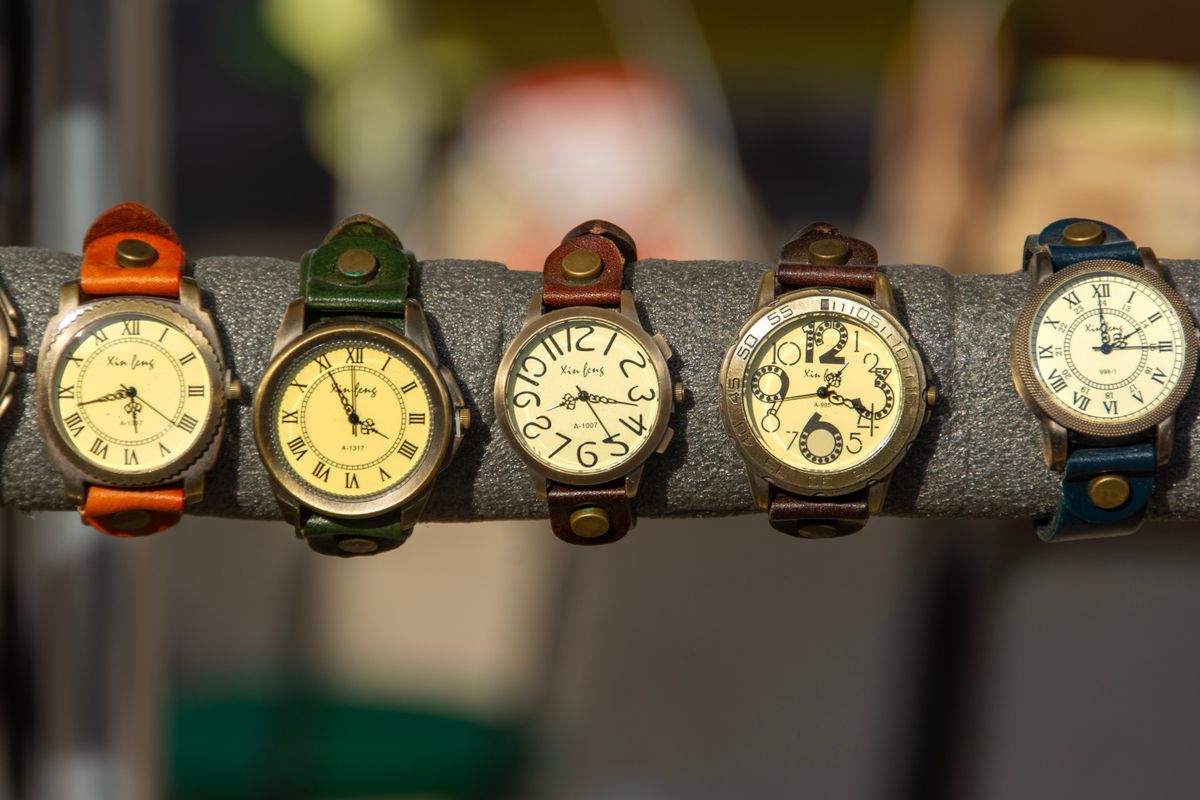
Common widths are 18, 20, 22 and 24 mm, with 19 and 21 mm appearing on some Swiss cases. Those odd sizes are where swaps go wrong: a 21 mm strap on a 20 mm watch sounds adjacent and installs terribly, compressing at the lug junction and sometimes blocking the spring bar from seating. Treat lug width as an exact match, not a close-enough band.
Spring bars: the part that actually fails
Spring bars have two dimensions, and charts usually mention neither. Length must match lug width exactly — a bar sold as 20 mm is intended for 20 mm lugs, and one that is too long will not compress while one too short leaves the shoulder outside the hole. Diameter is the hidden variable: 1.5 mm is the standard for dress and vintage pieces, 1.8 mm “fat bars” are common on dive and sport watches, and heavy tool cases may need 2.0 mm or more.
The pairing rule is simple: bar diameter should fill the lug hole. A 1.5 mm bar in a 2.5 mm hole rattles with every movement, wears both the bar and the hole, and can eject under a sharp tug. Watchmakers replace bars on every strap change for this reason — they cost almost nothing and fail more often than the strap itself.
Quick-release bars trade strength for convenience. The release lever is cut into the tube, which weakens it, so they suit light watches on short leashes; heavy sports cases do better with standard shouldered bars. The lever also adds a snag point at the lug — on a bracelet-heavy case it can catch a cuff, which is annoying rather than dangerous but worth knowing before choosing them for daily wear.
Taper and thickness: the numbers charts skip
Width gets all the attention, but two more dimensions decide how the strap wears. Taper is the narrowing from lug to buckle — a 20/16 strap runs 20 mm at the lugs and 16 mm at the buckle. A strong taper looks dressier and flexes under a shirt cuff; field watches traditionally run straight. Thickness governs whether the strap fits the channel between the lugs at all: every case has a maximum clearance between the spring bar and the case back, and a strap above it either will not install or bulges at the junction.
| Case type | Typical lug width | Typical spring bar | Strap thickness | Typical taper |
|---|---|---|---|---|
| Dress watch, 36–38 mm | 18–20 mm | 1.5 mm | 2.5–3.5 mm | 18/14 to 20/16 |
| Field watch, 38–40 mm | 20 mm | 1.8 mm or quick-release | 3.0–4.0 mm | Straight |
| Dive watch, 40–42 mm | 20–22 mm | 1.8–2.5 mm fat bar | 3.5–4.5 mm | 22/20, slight |
| Oversized chronograph, 44 mm+ | 22–24 mm | 2.5 mm fat bar | 4.0–5.5 mm | 22/18 or straight |
| Vintage dress, 33–36 mm | 16–18 mm | 1.5 mm | 2.0–3.0 mm | 18/14, often strong |
NATO straps sit outside the thickness logic at 1.0 to 1.4 mm, which is why they slide into cases with tight clearance — and why they are the safe one-piece choice where a failed spring bar would drop the watch. That security trade-off is the same logic as the belt and buckle systems guide: the fastener is part of the fit.
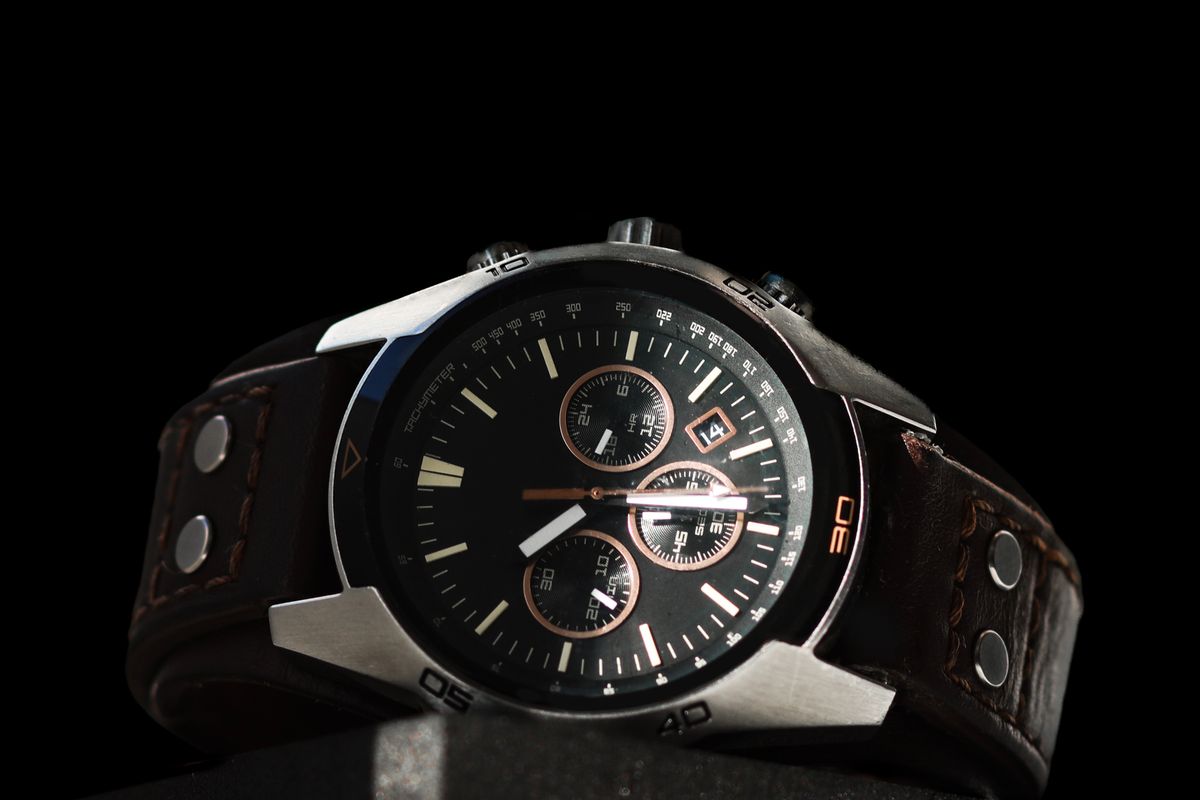
A tool-watch pairing: the padded strap runs thick enough to need clearance checks, and the case takes a fat spring bar to fill its lug holes.
Strap length follows the wrist, not the case
Length is sized in two halves — the buckled short side and the pierced long side — sold as pairs like 120/75 mm. Common pairings run roughly 110/70 for wrists under about 6.5 inches, 120/75 for the 6.5 to 7.5 inch range, and 130/80 above 7.5 inches. Two fit checks beat any chart: one finger should slide under the strap, and the tang should land on a middle hole rather than the last one. A leather strap worn at its extreme hole creases at the wrong point and cracks early.
Wrist measurement itself is the same discipline as any body measurement — watch case sizing covers the case-side equivalent, where lug-to-lug length decides how a case sits across the wrist.
Odd widths and what to do about them
Some cases will never take an off-the-shelf strap. A 19 mm lug width has thin retail coverage; the realistic options are a custom strap cut to width, a specialty retailer that stocks odd sizes, or — with leather only and some skill — trimming a 20 mm strap’s edge. What does not work is forcing the nearest even size: the failure modes above all come from millimetre shortcuts.
The full habit, then, takes four numbers and one minute with a ruler: lug width matched exactly, spring bar matched in length and diameter, thickness inside the case’s clearance, and a taper chosen for cuffs rather than for the product photo.
More in Accessories
FAQ
- Can I fit a 20 mm strap on a watch with 22 mm lugs?
- No. The strap will sit between the lugs with a visible gap, the spring bar shoulders will not seat properly, and the strap can pull free under load. Lug width must be matched exactly — a one-millimetre difference is small on paper and a failure in practice.
- How do I measure lug width without calipers?
- Remove the strap and measure the gap between the inside faces of the two lugs with a millimetre ruler. Do not measure the outer width of the lug tips, and do not measure across the old strap — worn leather compresses and under-reads.
- What is a fat spring bar?
- A spring bar with a thicker tube, usually 1.8 mm or more, used where the lug holes are large. A thin 1.5 mm bar in a big hole rattles, wears the hole, and can pop out under a sharp pull — which is how watches end up on the floor.
Second Look
Every figure used above, with the section it appears in. If a number here does not match the page you are reading, trust the page — and tell us.
- 24 mm
- Lug width: the first number
- 21 mm
- Lug width: the first number
- 20 mm
- Lug width: the first number
- 1.5 mm
- Spring bars: the part that actually fails
- 1.8 mm
- Spring bars: the part that actually fails
- 2.0 mm
- Spring bars: the part that actually fails
- 2.5 mm
- Spring bars: the part that actually fails
- 16 mm
- Taper and thickness: the numbers charts skip
Tessa Marlow
Writes about garment construction, leather goods and footwear specs. Started in retail floor management before moving to editorial research. Our standards.