Pilling by Month Six: Fibre Length and Two Washing Habits
Pilling is a fibre-length and yarn-twist problem, not simply cheap wool. Two washing habits measurably reduce it, and some damage cannot be undone.
Reviewed by Maya Ellis · Updated Sep 18, 2026
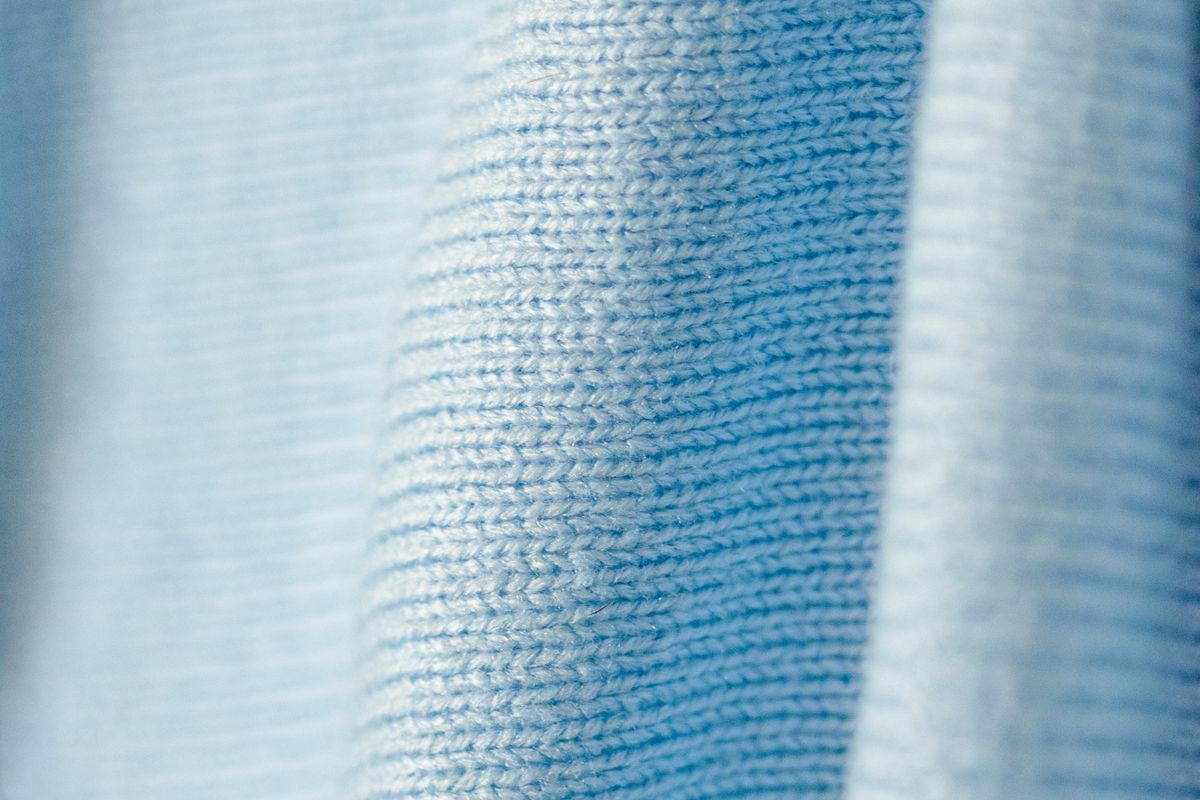
A pill is a small ball of short or broken fibres tangled on the surface of a knit, anchored by longer fibres still held in the yarn. The textile industry breaks the process into four stages: fuzz formation, entanglement, growth, wear-off. Read that sequence and the popular rule collapses. Pilling is not a price signal; it is a fibre-length and yarn-twist problem, and both can be present in an expensive sweater.
Why “cheap wool pills” is only a proxy
Two variables decide how fast fuzz becomes pills. Fibre length, or staple: longer fibres have fewer loose ends and take longer to work out of the structure, so they pill less. Twist: the more tightly fibres are held together, the denser the yarn, and the harder it is for an end to escape. A high-twist yarn from a modest long-staple fleece can outlast a low-twist yarn from a softer, shorter one.
Blends misbehave because mixing fibre lengths creates more loose ends at the surface, and the stronger fibre holds a pill the weaker one formed. Synthetics behave differently again: acrylic is a continuous filament with no loose ends to migrate, so it fibrillates, splitting into flaps that tangle into pills which never shed. Cotton knits pill at cuffs and elbows for the same reason wool does.
The two habits that move the number
Wash inside out, in a mesh bag, on a short low-spin cycle. Inside out sends abrasion to the inner face and protects the surface you see. The bag limits contact with other laundry, and low agitation reduces the friction that lifts fibre ends. Use cool water and an enzyme-free, wool-safe detergent, and skip fabric softener entirely: softener loosens fibres and makes pilling worse.
Never put knitwear in a dryer. Heat and constant tumbling are the largest wash-related cause of pilling, and they also shrink and felt wool. Air dry instead. Washing less often helps too: published guidance puts merino at roughly every 3 to 5 wears, cashmere at 5 to 7, and outerwear such as coats and suits at 5 to 10.
Dry flat, and why a hanger wrecks a knit
Wet wool is heavy. Hung up, it stretches at the shoulders, drops the hem and lengthens the sleeves, and the distortion is permanent. Lay it flat on a towel, reshape it to its original dimensions and keep it away from direct heat. Watch the friction points while you wear it: underarms, elbows, cuffs, and anywhere a bag strap or seatbelt rubs. An unlined coat or a rough denim jacket over a soft knit raises fuzz on its own.
Shaver or comb, and what cannot be fixed
An electric fabric shaver is fast on tougher knits and synthetics; a fine-tooth sweater comb is gentler on cashmere and fine wool, lifting pills with less risk of cutting the yarn. Lay the knit flat, apply light tension, work in short strokes in one direction, and empty the tool often. Never pull pills off by hand; that tugs fibres and can open a hole.
The limit is worth stating plainly. Surface pills can be removed, which is the same mechanism covered in cashmere ply and gauge. Fibre that has already migrated out and left a thin, balding patch at the elbow cannot be put back, which is why the laundry arithmetic in a 12-piece workwear capsule starts from the fibre and not the outfit. When a listing does quote a Martindale grade or a fibre spec, how to read a spec sheet explains what the number is actually measuring.
FAQ
- Does pilling mean the wool is cheap?
- Not directly. Pilling follows fibre length and yarn twist, so a short-staple expensive yarn can pill more than a longer-staple cheaper one. Blends of different fibre lengths often pill worse than either fibre alone.
- Does a fabric shaver damage knitwear?
- Used lightly, no. Keep the garment flat, stretch it gently and use short strokes without pressing. Over-shaving thins the fabric, and a fine-tooth comb is gentler on cashmere and fine wool.
- Can washing method alone prevent pilling?
- No. Washing inside out in a mesh bag on a low-spin cycle and never tumble drying measurably reduce it, but a low-twist short-staple yarn will still pill. Care slows it; construction sets the ceiling.
Maya Ellis
Writes about garment construction, leather goods and footwear specs. Started in retail floor management before moving to editorial research. How we research.