One Pair From Commute to Dinner: Three Shoes Compared
A single pair has to survive standing, wet pavement and an evening. How heel pitch, sole type and upper material decide which shoe can do all three.
Reviewed by Maya Ellis · Updated Sep 11, 2026
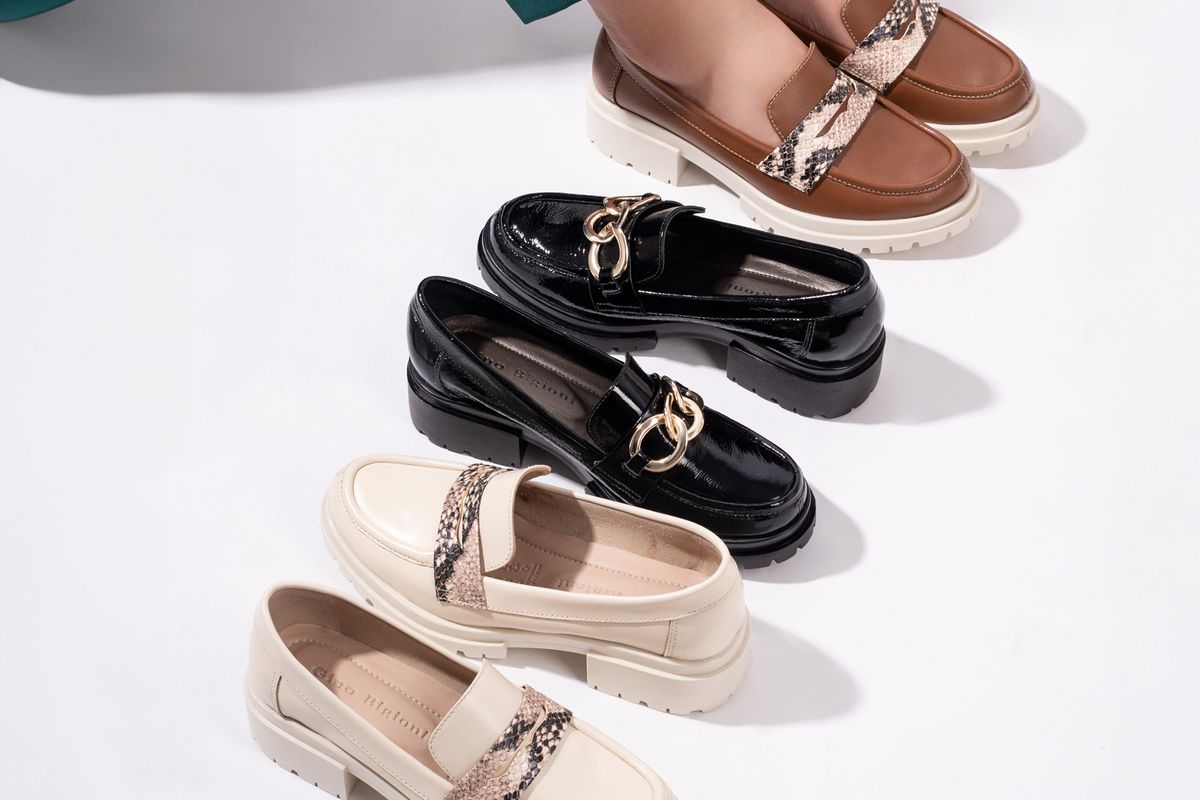
One pair that has to cover a full day is a set of compromises, and they sit in the same three places: the pitch of the heel, the material under the sole, and how the upper behaves by hour nine. Nothing about a commute shoe and a dinner shoe overlaps except the shape.
Three things a full day demands
First, a heel the calf tolerates while standing, not just while walking — different loads, and standing is the harder one. Second, an outsole that grips wet pavement and does not wear through on grit. Third, an upper that creases somewhere harmless. Leather folds at the flex point whether you like it or not; the question is whether the fold lands across the vamp, where it reads as character, or across the toe, where it does not.
Commute and dinner pull in opposite directions
Commute asks for thickness. A thin sole transmits every paving slab through the foot, and a slightly platformed sole with foam under it is what makes a mile on concrete tolerable. Dinner asks for the opposite: thickness under the forefoot raises the whole shoe, so the silhouette reads casual, and a platform under a tailored trouser looks like exactly what it is. This is why the two categories rarely meet in one pair.
Is a leather sole viable at all?
On its own, not for a daily commute. Bare leather offers little grip on wet stone and wears quickly against grit, and a thin sole transmits every uneven surface. The standard workaround is a thin rubber topsole bonded to the leather, which keeps the welted construction and the profile while restoring grip — the same logic that makes a welted boot worth resoling rather than replacing. If the sole cannot be replaced, a leather outsole is a wear item on a short clock.
Dr. Martens 1461 makes the clearest trade of the three: a welted air-cushioned sole the brand describes as oil and fat resistant with good abrasion and slip resistance, against a Smooth leather upper that is stiff when new and creases most at the vamp. It is the pair that lasts longest and feels worst in week one.
Vagabond Kenova Loafer takes the dinner side of the brief. The brand’s own description calls it a chunky shoe on a lugged outsole, so the sole flexes from the first wear and the leather upper carries the silhouette. The cost is the sole itself: a chunky profile under a tailored trouser is a deliberate look rather than a neutral one.
ECCO Soft 7 Tred GTX Chelsea is the only one of the three with a published weather claim — a GORE-TEX membrane the brand states is 100% waterproof, over oiled nubuck and a PU and rubber outsole. It covers both ends of the day, and it is the heaviest and most expensive answer.
The commute decides the sole. Dinner decides everything else. Buy for the sole first, because it is the one part you cannot adjust.
What the numbers will not settle
None of the three publishes a weight, so the figure that decides hour nine is missing from all three listings. If you cannot try a pair first, chase heel height on the setting you will wear and outsole material — the discipline that makes a spec sheet readable rather than decorative.
Recommendations
Some links below are affiliate links — we may earn a commission at no extra cost to you.
Pick 01
Dr. Martens 1461
Best for lasting through the day USD 160
A welted three-eye oxford on the brand's air-cushioned sole, which the brand describes as oil and fat resistant with good abrasion and slip resistance. The trade is the upper: Smooth leather is stiff when new and creases most across the vamp.
Works
- Welted construction with a replaceable air-cushioned sole
- Sole claimed oil and fat resistant with good abrasion and slip resistance
- Smooth leather takes polish, so scuffs on a commute can be buffed out
Trade-offs
- Stiff when new, with no break-in figure published
- No weatherproofing on the upper, and no published weight
Pick 02
Vagabond Kenova Loafer
Best for the dinner half EUR 120
The dinner-side pick: a loafer the brand describes as a chunky shoe on a lugged outsole. That sole flexes from the first wear, so the upper is not fighting a stiff platform all day.
Works
- Sole flexes from new, so no break-in period on the platform
- Leather upper holds a dressier silhouette than a trainer
- Lowest price of the three
Trade-offs
- Chunky lug profile is a deliberate look rather than a neutral one
- No weather resistance claimed and no published weight
Pick 03
ECCO Soft 7 Tred GTX Chelsea
Best in wet weather USD 200
The only one of the three with a published weather claim: a GORE-TEX membrane the brand states is 100% waterproof, over oiled nubuck with a PU midsole and rubber tread outsole. It covers both halves of the day and is the heaviest and most expensive answer.
Works
- GORE-TEX membrane stated by the brand as 100% waterproof
- Rubber tread outsole for grip on wet pavement
- Inside zip plus chelsea gore for easy on and off
Trade-offs
- Highest price of the three
- Heaviest construction, and no weight or heel height published by the brand
Comparison
| Spec | Dr. Martens 1461 | Vagabond Kenova Loafer | ECCO Soft 7 Tred GTX Chelsea |
|---|---|---|---|
| Heel height or pitch | Flat; the brand publishes no heel figure for this style | A retailer lists 1.5 in (about 38 mm) | About 25 mm, from a retailer measurement |
| Upper material | Smooth leather, lightly textured with a soft sheen | Cow leather | Oiled nubuck leather |
| Weather resistance | Sole claimed oil and fat resistant; upper not waterproofed | None claimed | GORE-TEX membrane, stated by the brand as 100% waterproof |
| Weight | Not published by brand | Not published by brand | Not published by brand |
| Break-in time | Stiff to start; brand describes the leather as stiff when new | Chunky lug sole flexes from new | No break-in claim published |
| Price | USD 160 | EUR 120 | USD 200 |
FAQ
- Is a leather sole practical for commuting?
- Rarely on its own. A bare leather outsole offers little grip on wet pavement and wears quickly on grit, which is why leather-soled shoes are usually fitted with a thin rubber topsole for daily wear.
- What heel height works for standing all day?
- The lower the pitch, the longer the calf tolerates it. A flat platform shifts load to the forefoot, while anything above roughly 40 mm starts to put the ball of the foot under continuous load.
- Which sole material handles wet pavement best?
- Rubber and rubber blends with a defined tread pattern. Leather and hard PVC both lose grip on wet stone, and a smooth sole is worse than a lugged one regardless of material.
Sources
Maya Ellis
Writes about garment construction, leather goods and footwear specs. Started in retail floor management before moving to editorial research. How we research.