Loafer Lasts and Width Letters, Brand by Brand
Two loafers in the same nominal size fit differently because the last differs. How lasts, width letters and heel slip decide whether a slip-on works.
Reviewed by Tessa Marlow · Updated Sep 1, 2026
What this answers
- What is a shoe last?
- Why do loafers slip at the heel more than lace-up shoes?
- Does a wider width letter change the length of the shoe?
A shoe’s last is the foot-shaped form the upper is built over, and it is why two loafers marked US 9 can feel half a size apart. Length is easy to standardise. Volume — girth at the ball, instep height, heel curve — is not, and a slip-on exposes every bit of that gap.
What a last actually controls
Every measurement that matters in fit is a consequence of the last rather than of the size stamped inside the shoe. Length at the toe gets the attention, but the fit decisions that make or break a loafer happen elsewhere on the form: the girth measured around the ball of the foot, the height of the instep where the vamp crosses it, the width of the heel seat, and the curve the last follows from heel to toe.
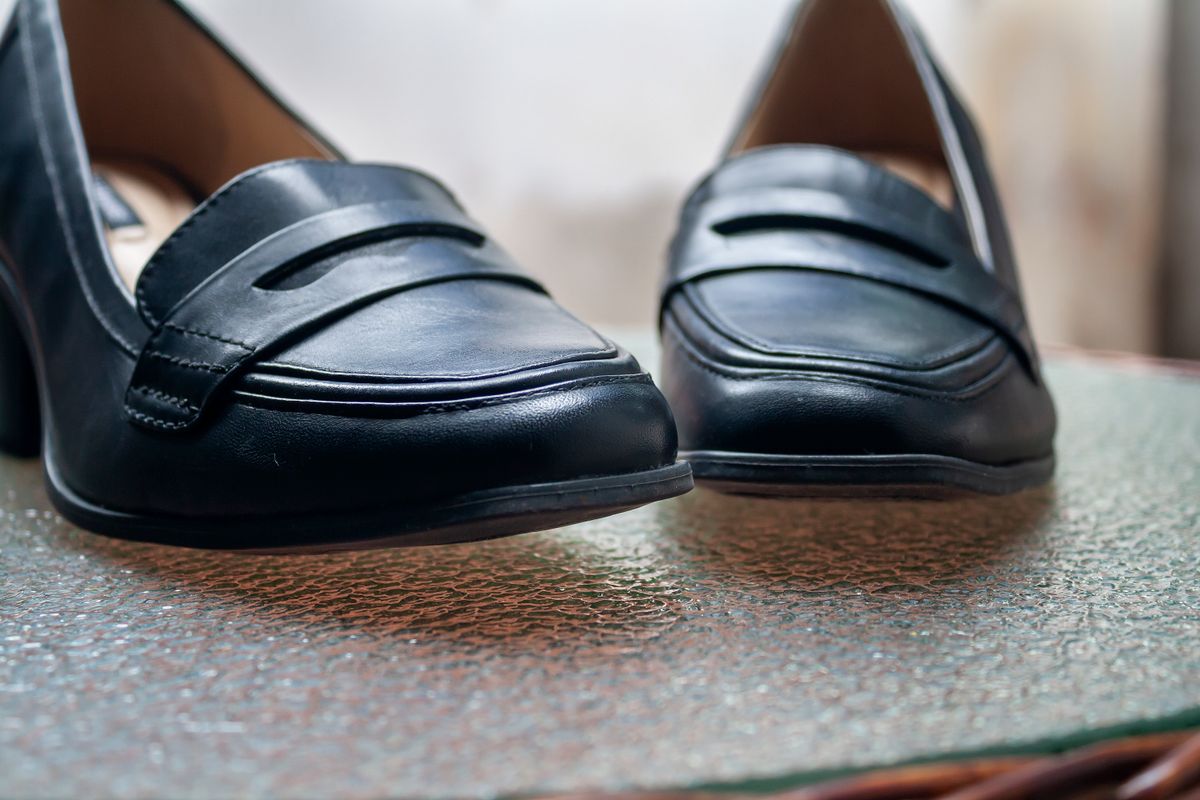
A brand that cuts one last and grades it up and down the size range is telling you something specific. It has decided, deliberately or by default, whose foot occupies that range. Two brands can grade the same length and land at different ball girths, which is why the number on the box is a starting point rather than a fit verdict. The last is the fit; the size is just the label attached to it.
Why a slip-on has no room for error
Lace-up shoes forgive. The laces close the upper over the instep, so a last that runs roomy or narrow can still be pulled into a wearable fit, and a half-mismatch disappears under the lacing. A loafer has no laces and no adjustment, so everything has to be right when the foot slides in.
That constraint shapes how shoemakers build loafer lasts. Most cut them separately from their lace-up forms, usually with a tighter heel and a lower instep, because the shoe must hold the foot by shape alone. Get either one wrong and the shoe announces it with every step, either by pinching over the instep or by lifting at the heel.
Reading width letters across brands and regions
Width letters are how brands sell the variants of a last, and there is no industry standard mapping a letter to a measurement. One brand’s D is another brand’s standard fit, which makes the letters useful within a brand and close to meaningless between brands.
Clarks makes the regional problem visible. The UK fit guide lists women’s widths as D (standard), E (wide) and EE (extra wide) and men’s as G and H, with no narrow letter at all, while the Australian site adds C for women and F for men. The same brand, the same lasts, two neighbouring markets — and one of them offers a slim fit the other never names. A single-width brand is making the same kind of statement in reverse: it has decided which foot its last was cut for, and it sells no alternative.
The practical method is to stay inside one brand’s letter system when comparing its own shoes, and to treat letters from different brands as unrelated labels that happen to share an alphabet. The letters also describe girth at the ball and through the heel together; no common system sells a wide heel on a narrow ball separately, which is why a width letter sometimes solves half a fit problem and leaves the other half standing.
Penny, venetian and tassel do not sit the same
The three classic uppers behave differently even on an identical last. A penny loafer keeps a raised strap over the instep, adding volume across the top of the foot; it is the most forgiving of the three for a higher instep, because the strap adds structure without tightening anything. A venetian loafer removes that strap, so the vamp sits lower and the same last feels tighter over a high instep. A tassel loafer adds a kiltie across the throat and usually sits on a wider, squarer toe.
Upper style and last shape interact. The same low-volume venetian cut that flatters a high instep can leave a low-volume foot swimming, because nothing across the throat takes up the slack. This is one reason the same wearer can need two different sizes in two loafer styles from one brand.
Heel slip is the usual complaint
Loafers slip at the heel more than any other shoe type, and it is rarely a length problem. Excess volume in the heel — the last is wider than the wearer’s heel — makes the shoe lift with every step. A sole too stiff to flex at the ball levers the heel up as the foot rolls, which is a different failure with a different fix.
The two causes get confused constantly, and the standard response to both — sizing down half a size — makes the second one worse. The foot sits forward, the toe box crowds, and the stiff sole still levers the heel up because nothing about the flex changed. Before buying smaller, test which failure you have: if the heel lifts only after the ball should have flexed, the sole is the suspect, and a wider-or-narrower letter will not touch it.
Three loafers, three answers
Clarks Code Step is the pick when width is the problem rather than length: Medium and Wide on the same length, which is exactly the adjustment a slip-on needs. Its EVA sole flexes at the ball from new, so the levering failure above never gets a chance to start.
Dr. Martens Adrian takes the opposite approach: no width option at all, so the last decides the fit. Its welted lines are heat-sealed and reinforced with the signature welt stitch, which is what makes the sole replaceable. The trade is break-in: the sole will not flex at the ball, and until it does, the heel lift stays.
Soludos Venetian Loafer is the flat, low-volume option: suede upper, cotton twill lining, no width variants. The brand makes it in full sizes, each sold as a range covering the half size above — if you wear a 10 or a 10.5, you buy the 10–10.5 — so the foot fits the last rather than the reverse.
A last that never changes is not a sizing system. It is a statement about whose foot the brand expects to arrive.
Break-in fixes leather, never structure
Break-in gets blamed for too much. What it legitimately fixes is stiffness: the sole softens with flex cycles, the upper relaxes where your instep presses it, and a snug-but-even fit settles into shape. What it never fixes is a structural mismatch. A heel seat cut wider than your heel stays wide, because nothing in normal wear pulls volume out of a heel counter, and leather stretched over a void simply creases into that void.
The test is direction of discomfort. Pinching that eases over the first weeks of wear was break-in territory. Lifting, or a gap you can see at the sides of the heel, was a last mismatch on day one and remains one a month later. Buying on the promise that a mismatch will wear in is the most expensive mistake in this category, because a resole will not change the last either.
Fit tests you can run in two minutes
Three checks separate a wearable loafer from a wishful one, and none needs anything but your feet. The first is the insole test: loosen nothing, slide your foot in, and stand. Your toes should reach the front of the shoe without pressing into it, and a finger’s width of room at the toe is the usual target. In a slip-on, standing matters more than sitting, because the foot lengthens slightly under load and a fit judged from a chair flatters the shoe.
The second is the flex test. Press the sole up with a thumb at the ball, where the shoe should bend. A sole that resists will lever your heel upward on every step, which is the stiff-sole cause of heel slip described above. If you cannot flex it in the shop, it will not flex on day one, and only break-in tells you whether it ever will.
The third is the heel-pop test. Walk a short loop, including a turn, and watch for the heel lifting before the ball has bent. Lifting on the turn signals excess heel volume — a letter problem. Lifting only after the ball resists bending signals the sole problem, and a width letter will not fix it. Run all three and the two causes of heel slip separate themselves, which is the whole point: buying the fix for the failure you actually have.
What the table will not tell you
Two numbers decide most loafer fit and neither appears in a listing: instep height at the throat and heel width at the seat. Both can be estimated from photographs. On the instep, look at the profile from the side: a vamp that rises in a high, even arc carries more volume than one that slopes low across the throat. On the heel, look straight down from behind: a seat that flares outward beyond the heel breast signals more heel volume than a seat that tucks in.
If a brand publishes only length, treat width as unknown — the same problem applies to sneakers, where width labels vary by brand, and to ankle boot shaft measurements. The rest of the vocabulary is in how to read spec sheets.
Recommendations
Some of the links below are affiliate links, which means we may earn a commission on qualifying purchases at no extra cost to you.
Pick 01
Clarks Code Step
Best when width is the problem USD 110
A women's step loafer sold in Medium and Wide on the same length, which is the adjustment a slip-on actually needs. The EVA sole flexes at the ball from new, so the heel has less reason to lift. Patent leather upper, textile lining.
Works
- Two widths (Medium and Wide) on the same length
- Full and half sizes from US 5 to 12
- Claimed heel height 1.4 in with a lightweight EVA sole
Trade-offs
- Patent leather creases visibly across the vamp
- No narrow width, so low-volume feet have no option here
Pick 02
Dr. Martens Adrian
Best for a resoleable pair USD 160
The unisex tassel loafer, sold in one width only, so the foot has to fit the last rather than a letter. The brand states its Goodyear-welted lines are heat-sealed and reinforced with the signature welt stitch, and the Smooth leather can be polished to a shine or left scuffed.
Works
- Goodyear-welted, so the sole can be replaced
- Smooth leather can be polished to a shine or left scuffed
- In the line-up since the 1970s, the brand's first shoe inspired by subcultures
Trade-offs
- No width variants at all
- The stiff welted sole levers the heel up until it breaks in
Pick 03
Soludos Venetian Loafer
Best for low-volume feet USD 139
The men's venetian cut, made in whole-size ranges rather than half sizes, so each range covers two nominal sizes. The brand describes it as true to size and deliberately snug out of the box. Suede upper, cotton twill lining, rubber outsole.
Works
- Stripped-back vamp sits low over the instep
- Suede upper with a breathable cotton twill lining
- Brand publishes base height (13–15 mm) on the product page
Trade-offs
- Deliberately snug at first, so it needs a wear or two to settle
- No width letters; sold in full sizes, each covering a two-size range
Comparison
| Spec | Clarks Code Step | Dr. Martens Adrian | Soludos Venetian Loafer |
|---|---|---|---|
| Last shape | Rounded toe, low instep, step-loafer profile | Rounded toe profile, single width only | Slim venetian cut, flat vamp |
| Width letters offered | Medium and Wide | None — one width only | None — one width; sold in full sizes, each labelled as a two-size range |
| How it runs | True to size, half sizes | No fit note published by the brand | True to size, snug out of the box |
| Lining | Textile | Leather and textile mix | Cotton twill |
| Sole type | EVA with a foam core window | PVC air-cushioned, Goodyear welted | Rubber, 13–15 mm base |
| Price | USD 110 | USD 160 | USD 139 |
More in Shoes
FAQ
- What is a shoe last?
- It is the foot-shaped form the upper is built over. Length, width at the ball, instep height, toe shape and heel curve are all consequences of the last, not of the nominal size.
- Why do loafers slip at the heel more than lace-up shoes?
- Because there are no laces to take up slack. If the last carries more volume through the heel than your heel occupies, the shoe lifts with each step, and sizing down rarely fixes it.
- Does a wider width letter change the length of the shoe?
- No. A width letter changes girth at the ball and through the heel on the same length. Going up a half size changes length and moves your foot forward in the shoe.
Sources
Second Look
Every figure used above, with the section it appears in. If a number here does not match the page you are reading, trust the page — and tell us.
- US 9
- Introduction
Tessa Marlow
Writes about garment construction, leather goods and footwear specs. Started in retail floor management before moving to editorial research. Our standards.