Sneaker Widths From Narrow to Wide: One Comparison Table
Sneaker widths are not one system. How published width charts, knit uppers and lacing patterns decide fit, with three shoes compared side by side.
Reviewed by Maya Ellis · Updated Sep 17, 2026
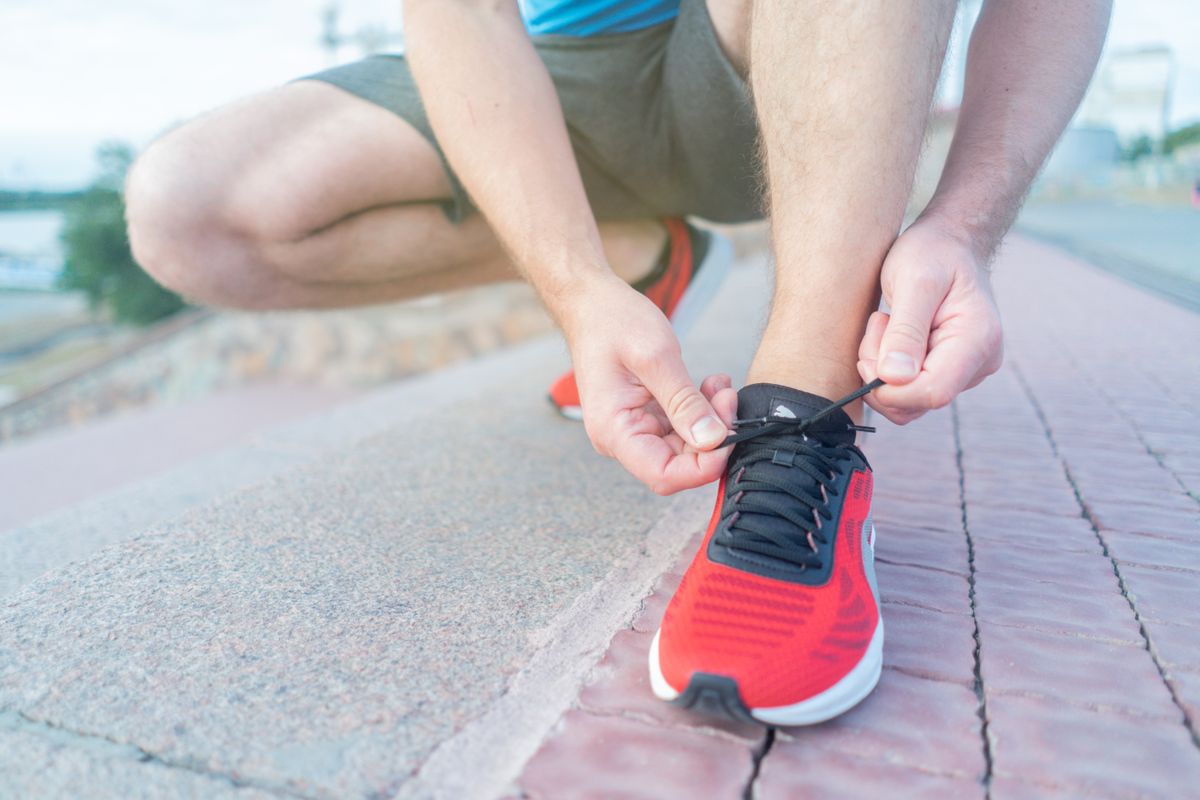
Sneaker widths are not a system. They are separate systems that share letters without sharing meaning: a standard width is B in women’s sizing and D in men’s, a wide is D or 2E depending on the brand, and several large brands publish no width options at all.
Why a knit upper forgives a “wrong” width
A cut-and-sewn leather upper holds its shape, so a narrow last stays narrow — the same hard constraint that makes loafer widths unforgiving. A knit or engineered mesh upper does not hold its shape: it stretches over the widest part of the foot and relaxes where the foot is narrower, so a wearer between two widths can often wear either one. The tolerance is real but bounded, which is why a sneaker can feel fine in the shop and wrong after an hour.
Measure in millimetres, then read the brand’s chart
Stand with your heel against a wall, mark the tip of the longest toe on paper, and measure the distance in millimetres. Compare that figure against the brand’s published foot-length column rather than your usual US size — the discipline behind reading a spec sheet.
Brands that publish width properly publish it in numbers. New Balance prints a foot-length-to-girth table covering six women’s widths, 4A through 4E. Brooks sells its distance shoes in narrow, medium, wide and extra wide. HOKA offers standard and 2E wide. Nike and adidas mostly offer one width and expect the upper to absorb the difference.
Where knit stops compensating
Two places. The toe box, where a knit upper has already stretched to its limit while the sole beneath it has not widened at all — width at the ball is set by the last and the midsole, not the fabric. And forefoot volume over a prominent first metatarsal head, where a soft upper has nothing left to give.
Two lacing changes that add usable width
Before changing size, change how the shoe closes. Running the laces straight across the forefoot instead of crossing them leaves the upper free to open wider, and starting the lacing at the outermost eyelets does the same more directly. Removing a thick aftermarket insole also loosens the fit. These are tendencies, not guarantees, and none will widen the sole.
Why half a size up is usually the wrong fix
Adding length moves your foot forward, placing the ball behind the widest part of the sole. The shoe is longer, not wider, and the bend point no longer matches the ball. If width is the problem, the width letter is the answer.
New Balance 574 is the widest-ranging of the three, sold in six women’s widths and six men’s widths with a published foot-length chart for each. The ENCAP midsole is an EVA core inside a polyurethane rim, and the brand publishes no stack height or drop.
Brooks Ghost 16 is the distance-shoe option, offered in four widths with a published 12 mm drop and 9.5 oz men’s weight. Against the HOKA it is thinner under the forefoot (24 mm against 27 mm) but thicker at the heel (36 mm against 32 mm), which is where its larger drop comes from. The toe box is the snugger of the two.
HOKA Clifton 9 covers only standard and 2E wide, but publishes a 5 mm drop and combines a knit upper with a roomy toe box — the combination that works best for forefoot volume. The narrow width range is the limitation. Whether that extra stack helps over a long day is the trade-off that decides one pair for a whole day.
Recommendations
Some links below are affiliate links — we may earn a commission at no extra cost to you.
Pick 01
New Balance 574
Best width range
The widest-ranging of the three: six women's widths and six men's widths, with a published foot-length-to-girth chart for each so the measurement can be checked before ordering. The ENCAP midsole is an EVA core inside a polyurethane rim, and the brand publishes no drop figure.
Works
- Six women's widths (4A to 4E) and six men's (2A to 6E)
- Brand publishes foot length and girth per width on its own measuring guide
- Half sizes available across the full width range
Trade-offs
- No published stack height or drop, so the ride has to be judged in person
- Suede and mesh upper gives less than a knit over a prominent forefoot
Pick 02
Brooks Ghost 16
Best if you want published numbers USD 140
A neutral daily trainer sold in four widths, with the brand publishing both a 12 mm midsole drop and a 9.5 oz men's weight on the product page. The platform is firmer and lower than the HOKA's, and the toe box is the snugger of the two.
Works
- Four widths including narrow and extra wide
- Brand publishes midsole drop (12 mm) and weight (9.5 oz men's)
- Engineered air mesh upper with a padded tongue and heel counter
Trade-offs
- Stack height is not on the brand page, only in retailer spec tables
- Snug toe box is the least forgiving of the three over a wide forefoot
Pick 03
HOKA Clifton 9
Best for forefoot volume USD 145
A knit upper over a roomy toe box is the combination that works best when the widest point of the foot is forward of the ball. Only standard and 2E wide are offered, and the brand publishes a 5 mm drop and an 8.70 oz weight.
Works
- Roomy toe box paired with a knit upper that gives where the foot needs it
- Brand publishes heel-to-toe drop (5 mm) and weight (8.70 oz)
- Engineered knit upper with a gusseted tongue
Trade-offs
- Only standard and 2E wide, so narrow feet have no option
- Stack height is not on the brand page; retailers list 32 mm heel / 27 mm forefoot
Comparison
| Spec | New Balance 574 | Brooks Ghost 16 | HOKA Clifton 9 |
|---|---|---|---|
| Width options | Six women's widths (4A to 4E) and six men's widths (2A to 6E) | Narrow, medium, wide and extra wide | Standard and 2E wide |
| How the sizing runs | Standard, half sizes across the width range | Standard; neutral platform | Standard, with a roomy toe box |
| Upper material | Suede and mesh | Engineered air mesh | Engineered knit |
| Midsole and stack height | ENCAP EVA core with a polyurethane rim; stack not published | DNA Loft v3; heel stack 36 mm / forefoot 24 mm | Compression-moulded EVA; retailers list 32 mm heel / 27 mm forefoot |
| Drop | Not published | 12 mm | 5 mm |
| Price | Not confirmed on the product page | USD 140 | USD 145 |
FAQ
- Why does my sneaker size differ from my leather shoe size?
- Because a knit or mesh upper conforms to the foot as you walk, so the shoe accommodates a wider range of feet than a cut-and-sewn leather upper that holds its shape.
- Is going up half a size the fix for a narrow sneaker?
- Rarely. A longer shoe moves your foot forward, so the ball lands behind the widest part of the sole. Change the width or the lacing instead.
- How do I measure my foot for sneakers?
- Stand on paper with your heel to a wall, mark the longest toe, and measure in millimetres. Compare that figure to the brand's own chart rather than to your usual US size.
Sources
Maya Ellis
Writes about garment construction, leather goods and footwear specs. Started in retail floor management before moving to editorial research. How we research.